Get a Quote
Despark Laser Equipment: Company Overview and Product Range
Despark is a professional laser machines(laser cutting machine、laser tube cutting machine、laser welding machine、laser cleaning machine) manufacturer/supplier based in Shandong China . We provide customized solutions for customers in laser equipment. Our capabilities include based on the customer’s material, tube dimensions, production requirements, automation needs, and available workspace.
Despark laser equipment covers cutting, welding and cleaning applications for industrial manufacturers and maintenance teams. With equipment development dating back to 2015, Despark’s supplied company information describes batch manufacturing, requirement-based customization and after-sales support.
For overseas buyers, selecting equipment involves more than choosing a machine category. The workpiece, process requirements, operating layout and support scope all influence whether a configuration fits the intended task. Despark’s product portfolio provides a starting point for discussing these requirements across metal fabrication, component production and surface maintenance.
What Does Despark Offer Industrial Buyers?
Despark’s equipment range addresses three connected production needs: cutting materials into required shapes, joining components and removing unwanted surface layers.
| Equipment Range | Main Function | Typical Buyer Requirement |
| Laser cutting equipment | Sheet and tube processing | Match the machine format to material dimensions and part geometry |
| Laser welding equipment | Metal joining | Select handheld or platform-type operation according to the workpiece and production method |
| Laser cleaning equipment | Surface contamination and coating removal | Assess the substrate, removal task and required surface condition |
These categories can support different stages of a manufacturing workflow. Each machine should still be selected against its own documented specifications and application requirements.
Laser Cutting Equipment for Sheet and Tube Processing
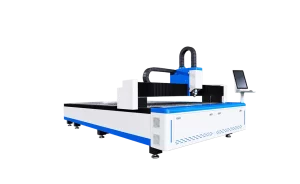
Despark’s documented cutting portfolio includes sheet cutting, tube cutting and combined tube-and-plate configurations. The appropriate format depends on what a factory processes and how its production is organized.
Sheet Laser Cutting Equipment
For buyers processing sheet metal, the initial selection should begin with material type, thickness range, sheet dimensions and finished-part requirements.
A single-platform configuration is one option within the supplied product range. Buyers should compare the specific model’s working area, laser source, control functions and loading arrangement against their actual production needs.
Tube Laser Cutting Equipment
The documented range includes side-loading and horizontal tube cutting configurations.
Tube equipment selection requires clear information about profile shape, dimensions, length and the features to be cut. Loading access and the movement of incoming material and finished parts also matter when planning the installation.
Tube-and-Plate Combined Equipment
A combined configuration is relevant to buyers who need to process both sheet and tube materials.
Before selecting this format, buyers should define the expected workload for each material type and how frequently production will switch between them. This helps establish whether a combined machine fits the intended schedule and operating arrangement.
Laser Welding Equipment for Different Production Methods
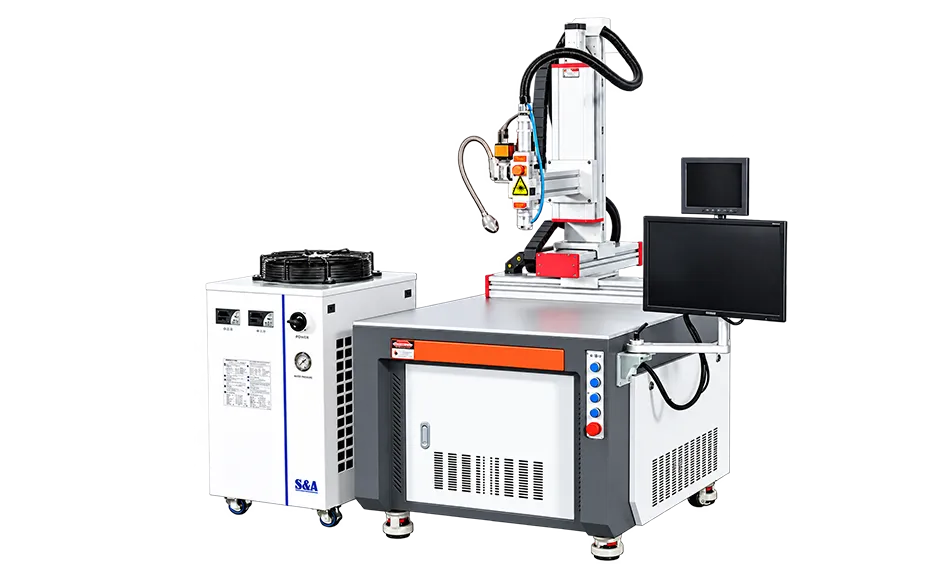
Despark’s supplied product range includes air-cooled handheld welding and platform-type welding equipment. These formats address different ways of positioning the workpiece and controlling the welding process.
| Welding Configuration | Selection Focus |
| Air-cooled handheld laser welding | Operator access, joint location, workpiece handling and the intended welding task |
| Platform-type laser welding | Part positioning, fixture requirements and the suitability of a programmed working process |
A handheld format allows the operator to guide the welding head around accessible joints. A platform-type configuration should be assessed around component positioning and the required working sequence.
For either option, buyers should provide the material, thickness, joint design and required weld result. These details are more useful for technical discussion than a request based only on laser power.
Air-Cooled Laser Cleaning Equipment for Surface Treatment
Despark’s documented cleaning products include Laser Cleaning Machine – Air-Cooled 1200W and Laser Cleaning Machine – Air-Cooled 1500W.
The LT-1500W combines handheld operation, integrated air cooling, selectable scanning patterns and touchscreen parameter storage. Its product information describes precision mold maintenance, weld cleanup and automotive component cleaning.
| Item | Documented Specification or Function |
| Model | LT-1500W |
| Laser power | 1500 W |
| Cooling method | Air cooling |
| Cleaning head | Handheld |
| Cleaning width | 0–300 mm |
| Fiber length | 10 m |
| Supply voltage / frequency | 220 V / 50 Hz |
| Published machine weight | 42 kg |
| Control functions | Selectable scanning modes, configurable cleaning paths, parameter saving and switching |
| Dust-handling provision | Dust-removal duct |
Integrated air cooling removes the need for an external cooling-water connection. The handheld head and fiber cable allow operators to work around accessible treatment areas, while casters support repositioning the main unit.
The product information lists rust, oxide scale, paint, oil and residual contamination as cleaning targets. Application suitability should be established against the actual substrate, surface layer and acceptable finish.
Buyers comparing the 1200W and 1500W models should review their documented configurations and sample results. Power ratings alone do not establish a fixed difference in cleaning productivity.
How Does Despark Approach Equipment Customization?
Despark’s supplied company information includes requirement-based customization. The discussion should begin with the production task and the constraints that the proposed equipment needs to address.
Useful information includes:
- Workpiece materials, dimensions and photographs.
- Cutting, welding or cleaning requirements.
- Expected workload and operating sequence.
- Available installation space and site power.
- Workpiece loading, positioning and handling needs.
- Requested configuration changes.
Customization feasibility depends on the selected model and technical review. Any agreed changes should be recorded in the final specification rather than assumed from a general product description.
What Should Buyers Review About Manufacturing and Support?
Despark’s company materials describe equipment development since 2015, batch manufacturing and after-sales support. For buyers evaluating an industrial laser equipment supplier, these capabilities should be connected to a clearly defined machine and supply scope.
| Review Area | What to Confirm |
| Machine configuration | Model, major components, technical parameters and included functions |
| Application assessment | Representative workpieces and agreed result criteria |
| Customization | Approved changes and their technical scope |
| Supply scope | Included equipment, accessories and any separately supplied items |
| After-sales support | Available support methods and agreed service responsibilities |
| Technical documentation | Final specification and relevant operating information |
For example, the LT-1500W documentation identifies a dust-removal duct. Buyers should confirm the connected extraction arrangement separately because the duct does not, by itself, establish that a complete collection system is included.
Clear configuration and support records help both parties work from the same equipment requirements.
How Can Buyers Select the Right Product Range?
Start with the process your business needs to perform.
| Your Requirement | Product Range to Explore | Information to Prepare |
| Cut sheet metal parts | Sheet laser cutting equipment | Material, thickness, sheet size and part drawings |
| Process tube profiles | Tube laser cutting equipment | Profile shape, dimensions, length and cutting features |
| Process sheets and tubes | Tube-and-plate combined equipment | Material mix, workload and changeover needs |
| Join metal components | Handheld or platform-type welding equipment | Material, joint design, access and positioning requirements |
| Remove rust, coatings or residues | Handheld laser cleaning equipment | Substrate, contamination, treatment area and required finish |
Providing this information early makes the product discussion more specific and helps identify which configuration needs further assessment.
FAQ
What products does Despark offer?
Despark’s supplied portfolio covers laser cutting, welding and cleaning equipment. Documented products include sheet and tube cutting configurations, air-cooled handheld welding, platform-type welding and air-cooled cleaning machines.
Does Despark offer equipment customization?
Despark offers requirement-based customization. Buyers should submit their application details and requested changes so feasibility can be reviewed for the selected machine.
What is the LT-1500W designed to clean?
Its product information describes rust, oxide scale, paint, oil and residue removal, with applications including mold maintenance, weld cleanup and automotive components. The actual workpiece should be assessed before confirming suitability.
How should buyers compare handheld and platform-type welding equipment?
Compare the workpiece, joint access, positioning method and operating sequence. These requirements help determine whether operator-guided welding or a platform-based process is more suitable.
What should an overseas buyer include in an inquiry?
Include drawings or photographs, material details, the required process result, expected workload and site conditions. Also identify any requested configuration changes and support requirements.